
Understanding Integrated Pest Management (IPM)
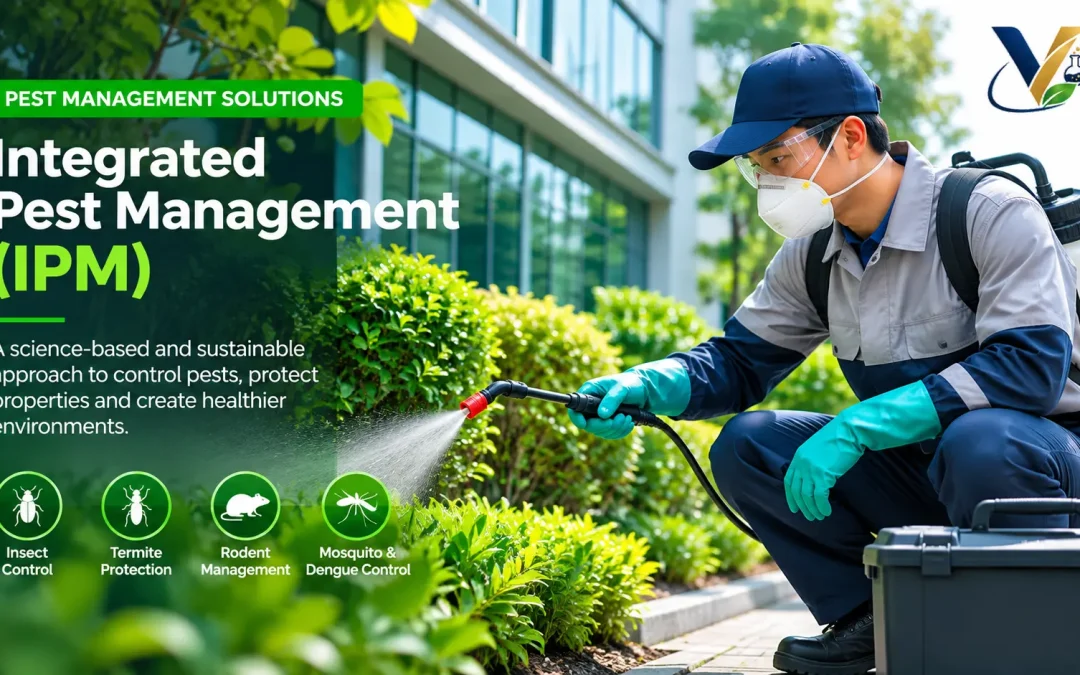
A science-based approach to managing pests, protecting properties and supporting healthier environments.
Pest management is an important part of maintaining clean, safe and healthy environments. Whether in residential, commercial or industrial settings, unwanted pests can create challenges for property owners, businesses and communities.
Traditional pest control often focuses on treating visible pest problems. However, effective pest management requires a broader approach that considers the causes of infestations, environmental conditions and appropriate prevention measures.
This is where Integrated Pest Management (IPM) plays an important role.
What Is Integrated Pest Management?
Integrated Pest Management (IPM) is a systematic approach to managing pests by combining different methods and strategies to prevent, monitor and control pest activity.
Rather than depending on a single treatment method, IPM considers several factors, including pest behaviour, environmental conditions, potential entry points and the level of pest activity.
The objective is to manage pest problems responsibly while considering people, properties and the surrounding environment.
Key Components of Integrated Pest Management
1. Inspection and Pest Identification
The first step in effective pest management is understanding the problem.
Inspection helps identify pest activity, potential entry points, environmental conditions and areas that may attract pests.
Correct identification is important because different pests require different management approaches.
2. Prevention and Environmental Management
Preventive measures help reduce the conditions that allow pests to survive and multiply.
These may include:
-
Improving cleanliness and sanitation.
-
Managing waste and food storage properly.
-
Reducing standing water where mosquitoes may breed.
-
Identifying and sealing potential entry points.
-
Maintaining buildings and surrounding landscapes.
Prevention is an important part of a long-term pest management strategy.
3. Monitoring and Assessment
Monitoring helps establish whether pest activity is present and whether management measures are appropriate.
Depending on the environment and pest type, monitoring may involve inspections, traps, observation points or other suitable monitoring technologies.
Information gathered through monitoring can help guide future management decisions.
4. Appropriate Pest Control Methods
When intervention is necessary, suitable control methods should be selected according to the pest, location and circumstances.
These may include physical barriers, mechanical methods, biological approaches or specialised chemical treatments where appropriate.
The selection and application of control measures should consider responsible use, safety requirements and relevant regulations.
5. Evaluation and Continuous Improvement
Pest management should not end after a single treatment.
Follow-up inspections and monitoring help assess pest activity and identify whether further action may be required.
This continuous process supports more informed and effective pest management decisions.
Different Areas of Pest Management
Integrated pest management principles can be applied across several pest management areas.
Insect Management
Insect management focuses on identifying, monitoring and managing insects that may affect residential, commercial and industrial environments.
Termite Protection
Termite management involves understanding termite activity, identifying potential risk areas and considering suitable prevention and protection measures for buildings and properties.
Rodent Management
Rodent management focuses on monitoring rodent activity, identifying access points and reducing conditions that may attract or support rodent populations.
Mosquito and Dengue Prevention
Mosquito management includes identifying potential breeding environments, reducing standing water and implementing suitable monitoring and control measures.
Prevention and environmental management are important considerations in supporting mosquito and dengue prevention efforts.
The Role of Technology in Modern Pest Management
Technology is creating new opportunities to support pest management activities.
Examples include:
-
AI-powered pest detection.
-
Smart monitoring systems and sensors.
-
Data analytics and predictive insights.
-
Digital inspection and reporting systems.
These technologies can support more informed monitoring, documentation and decision-making when appropriately implemented.
Why Responsible Pest Management Matters
Effective pest management should consider more than the immediate removal or control of pests.
A responsible approach takes into account:
-
The health and safety of people.
-
The protection of buildings and properties.
-
Environmental considerations.
-
Appropriate and responsible chemical use.
-
Long-term prevention and monitoring.
Combining scientific knowledge, suitable control methods and responsible practices can help support healthier environments.
Vectora Science: Science Behind Sustainable Protection
VECTORA SCIENCE PTE. LTD. focuses on pest management, environmental hygiene and specialised chemical solutions.
Through its focus on science, technology, research and innovation, Vectora aims to explore responsible solutions that support the protection of people, properties and communities.
Its areas of focus include Integrated Pest Management, termite protection, rodent management, mosquito and dengue prevention, and other specialised solutions.
Science Behind Sustainable Protection.
Conclusion
Integrated Pest Management provides a structured approach to understanding, preventing, monitoring and managing pest activity.
By combining inspection, prevention, monitoring and appropriate control methods, IPM supports a more informed and responsible approach to pest management.
As technology and scientific research continue to evolve, integrated approaches can play an important role in supporting healthier environments and more sustainable protection strategies.
Interested in learning more about pest management solutions?
Contact Vectora Science to explore its pest management and environmental hygiene capabilities.