
How AI and Smart Technology Are Transforming Pest Management
Smart, data-driven and technology-focused approaches for more informed and proactive pest management.
Technology is creating new opportunities to improve how pest activity is identified, monitored and managed.
Traditional pest management often relies on physical inspections, observation and periodic reporting. While these methods remain important, digital technologies can provide additional ways to collect information, monitor conditions and support decision-making.
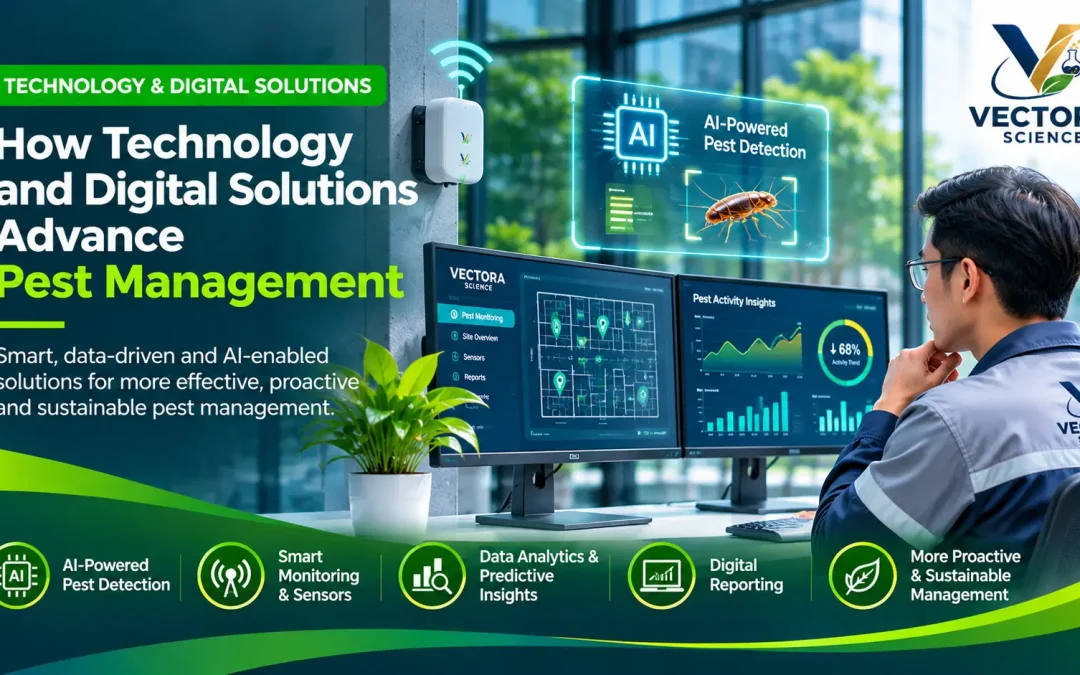
Artificial intelligence (AI), smart sensors, data analytics and digital reporting are among the technologies being explored to support more informed pest management approaches.
At Vectora Science, Technology & AI is an important area of focus within its wider commitment to science, research and sustainable protection.
The Role of Technology in Modern Pest Management
Technology can support pest management by helping organisations gather, organise and interpret information about pest activity and environmental conditions.
Depending on the systems used, digital tools may support:
-
Pest activity monitoring.
-
Identification and documentation.
-
Data collection and analysis.
-
Inspection records and reporting.
-
More informed operational planning.
These tools can complement professional inspections and appropriate pest management practices rather than replace them.
Key Technologies in Digital Pest Management
1. AI-Powered Pest Detection
Artificial intelligence offers potential applications in the identification and monitoring of pest activity.
Depending on the technology and available data, AI-based systems may be explored to analyse images, recognise patterns and support the identification of certain pest types.
Potential applications include:
-
Image-based pest identification.
-
Recognition of pest activity patterns.
-
Assistance with inspection documentation.
-
Supporting the review of monitoring information.
AI outputs should be assessed appropriately, as identification accuracy can depend on image quality, available data and system capabilities.
2. Smart Monitoring and Sensors
Smart monitoring systems use connected devices and sensors to collect information from selected locations.
In pest management, monitoring technologies may be explored for applications such as:
-
Recording activity from suitable monitoring devices.
-
Monitoring selected environmental conditions.
-
Supporting remote observation.
-
Providing information for inspection and follow-up.
The suitability of a monitoring system depends on its design, sensor capabilities, operating environment and intended application.
3. Data Analytics and Predictive Insights
Data analytics involves examining collected information to identify patterns, trends and possible areas requiring attention.
When suitable data is available, analytical tools may help organisations:
-
Review pest monitoring records.
-
Identify recurring activity patterns.
-
Compare observations across different locations.
-
Support inspection planning.
-
Identify areas that may require further investigation.
Predictive insights should be treated as decision-support information rather than guaranteed forecasts. Their reliability depends on the quality and completeness of the underlying data.
4. Digital Reporting and Documentation
Digital reporting can help organise information collected during inspections and monitoring activities.
Depending on the system, digital reporting tools may support:
-
Electronic inspection records.
-
Monitoring summaries.
-
Photographic documentation.
-
Service and follow-up records.
-
Information sharing between relevant teams.
Organised documentation can support clearer communication and more consistent operational processes.
Benefits of Integrating Technology into Pest Management
When appropriately selected and implemented, technology may provide several operational advantages.
Improved Visibility
Digital monitoring and reporting can help provide a clearer overview of recorded pest activity and inspection information.
More Informed Decisions
Data analysis can help support decisions about inspection priorities, monitoring requirements and suitable follow-up actions.
Better Documentation
Digital records can help organise observations, reports and relevant operational information.
Proactive Management
Monitoring information may help identify changes in pest activity that require further investigation or preventive attention.
Support for Sustainable Practices
Technology may help support more targeted monitoring and informed intervention decisions. The actual environmental benefits depend on the systems and practices used.
Combining Technology with Integrated Pest Management
Technology is most useful when considered as part of a wider pest management approach.
Integrated Pest Management (IPM) combines inspection, identification, prevention, monitoring and appropriate control methods.
Digital tools can complement these activities by supporting information collection, analysis and documentation.
For example, monitoring information may help identify areas that require closer inspection. Professional assessment can then determine the appropriate preventive or control measures.
This combination of scientific knowledge, professional assessment and suitable technology supports a more comprehensive approach to pest management.
Research and Innovation in Technology & AI
The development of new technologies continues to create opportunities for research and innovation in pest management.
Areas of interest include AI-powered detection, smart monitoring systems, data analytics and digital reporting.
Research, evaluation and appropriate implementation are important to determine how these technologies may be applied effectively in different environments.
At Vectora Science, Technology & AI forms part of the company’s broader focus on research, innovation and sustainable protection.
Vectora Science: Science Behind Sustainable Protection
VECTORA SCIENCE PTE. LTD. identifies technology and AI as important areas within its company profile.
Its areas of focus include:
-
AI-powered pest detection.
-
Smart monitoring and sensors.
-
Data analytics and predictive insights.
-
Digital reporting.
-
Technology for sustainability.
Through its interest in science, technology and innovation, Vectora aims to explore approaches that support the protection of people, properties and communities.
Conclusion
AI, smart monitoring, data analytics and digital reporting are creating new possibilities for modern pest management.
By complementing professional inspections and Integrated Pest Management practices, these technologies may help support better information gathering, monitoring and operational decision-making.
As research and innovation continue to develop, technology will remain an important area to explore in the pursuit of more informed and sustainable pest management approaches.
Discover Technology & Digital Solutions with Vectora Science.
For enquiries about Vectora Science and its areas of focus, please visit the Contact Us page.